Opinion: Telangana’s Caste Census Push — Social Justice or Political Optics? A Fact-Check First Look
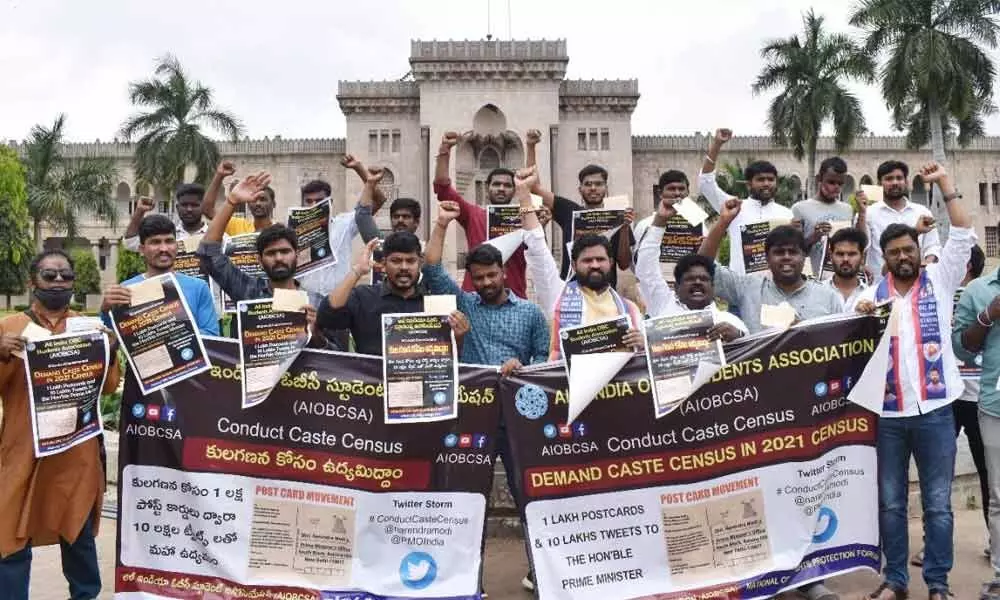
The renewed push for a caste census in Telangana has once again ignited a familiar but deeply consequential debate across the Telugu states: Is this a genuine attempt to correct historical inequities, or a politically timed move aimed at electoral consolidation?
In recent months, statements from the Telangana government, resolutions passed in the Assembly, and public messaging by the ruling leadership have placed the caste census squarely at the centre of state politics. Supporters frame it as a long-overdue exercise in social justice; critics warn of social fragmentation and data misuse. As opinions harden on both sides, RealCheck examines what is fact, what is assumption, and what remains unproven.
What Is Being Proposed — And What Is Not
Contrary to some viral claims, Telangana is not conducting a fresh national-level caste census on its own. What the state has pushed for is:
- A formal resolution urging the Union government to conduct a comprehensive caste census alongside the next national census.
- State-level socio-economic surveys to better map backwardness and welfare coverage.
- Use of updated data to justify demands for enhanced reservations for Backward Classes (BCs).
This distinction matters. Claims that “Telangana has already completed a caste census” are false. As of now, no such exhaustive, legally binding caste enumeration equivalent to a census has been completed.
Why the Issue Resonates Strongly in Telangana
Telangana’s political history is inseparable from social justice movements. From the Mulki agitation to BC mobilisation in the post-bifurcation era, caste-based representation has always influenced electoral outcomes.
Chief Minister Revanth Reddy has repeatedly argued that policymaking without updated caste data is “blind governance.” His claim rests on a verifiable premise:
- India’s last caste-wise census was conducted in 1931.
- The Socio-Economic and Caste Census (SECC) of 2011 collected caste data, but it was never fully released due to inconsistencies.
Fact check: This is accurate. There is no publicly usable, comprehensive caste dataset available today.
The Reservation Question — Numbers vs Narratives
One of the most circulated claims in Telugu media is that “BCs form over 50% of Telangana’s population but receive less than 30% reservations.”
Fact check:
- Population estimates for BCs vary widely depending on methodology.
- Without a verified caste census, no precise percentage can be stated as fact.
- Reservation limits are constrained by Supreme Court rulings, notably the 50% cap, unless extraordinary circumstances are legally justified.
What is verifiable is that Telangana has sought to enhance BC reservations to 42%, a move pending central approval. Whether updated caste data would automatically clear this legal hurdle remains uncertain.
Political Timing — Coincidence or Strategy?
Critics argue that the caste census push is less about governance and more about electoral arithmetic, especially with Lok Sabha elections and municipal polls influencing the political calendar.
This argument is partly speculative but not baseless:
- Caste-based mobilisation has historically increased voter consolidation.
- Similar demands have surfaced in other states — notably Bihar — during politically sensitive periods.
However, to label the move as purely opportunistic ignores a long-standing policy vacuum acknowledged across party lines.
Verdict: Political benefit may exist, but it does not automatically invalidate the policy rationale.
South India vs North India — A False Binary
Another claim frequently amplified online is that “caste census is a North Indian obsession being imported into the South.”
Fact check: False.
Southern states — including Tamil Nadu, Karnataka, Andhra Pradesh, and Telangana — have historically implemented stronger caste-based welfare frameworks than most northern states. The difference lies not in absence of caste politics, but in how openly it is acknowledged and institutionalised.
Risks That Are Being Underplayed
While supporters emphasise equity, several real risks deserve scrutiny:
- Data Accuracy
The SECC experience showed how difficult large-scale caste enumeration is. Errors can delegitimise the entire exercise. - Administrative Capacity
States may lack trained personnel to conduct, verify, and analyse such sensitive data. - Social Polarisation
Poorly communicated findings can fuel grievance politics rather than reform.
These are not hypothetical concerns — they are lessons from previous attempts.
Misinformation to Watch For
As the debate intensifies, readers should be cautious of:
- Claims that caste census will automatically increase reservations (false).
- Assertions that it will end merit (unsupported).
- Viral charts and WhatsApp forwards quoting precise caste percentages without sources (unverifiable).
Fact-checking here is not about taking sides — it is about demanding evidence before belief.
The Andhra Pradesh Angle
In Andhra Pradesh, similar discussions exist but remain politically muted. Welfare delivery has largely relied on household-level surveys rather than explicit caste enumeration. If Telangana’s push succeeds nationally, Andhra Pradesh may eventually face pressure to recalibrate its own data frameworks.
Conclusion: A Data Debate India Can No Longer Avoid
The caste census debate in Telangana reflects a larger national dilemma: Can India design social justice policies without current data?
The answer is increasingly no. But acknowledging the need for data does not mean ignoring its risks. For Telangana — and the Telugu states more broadly — the challenge lies in ensuring that evidence drives policy, not the other way around.
At RealCheck, our position is simple:
Strong opinions deserve stronger facts.